Defensive Risk Interpretation
Connecting to LMS... Progress: in progress
Narration
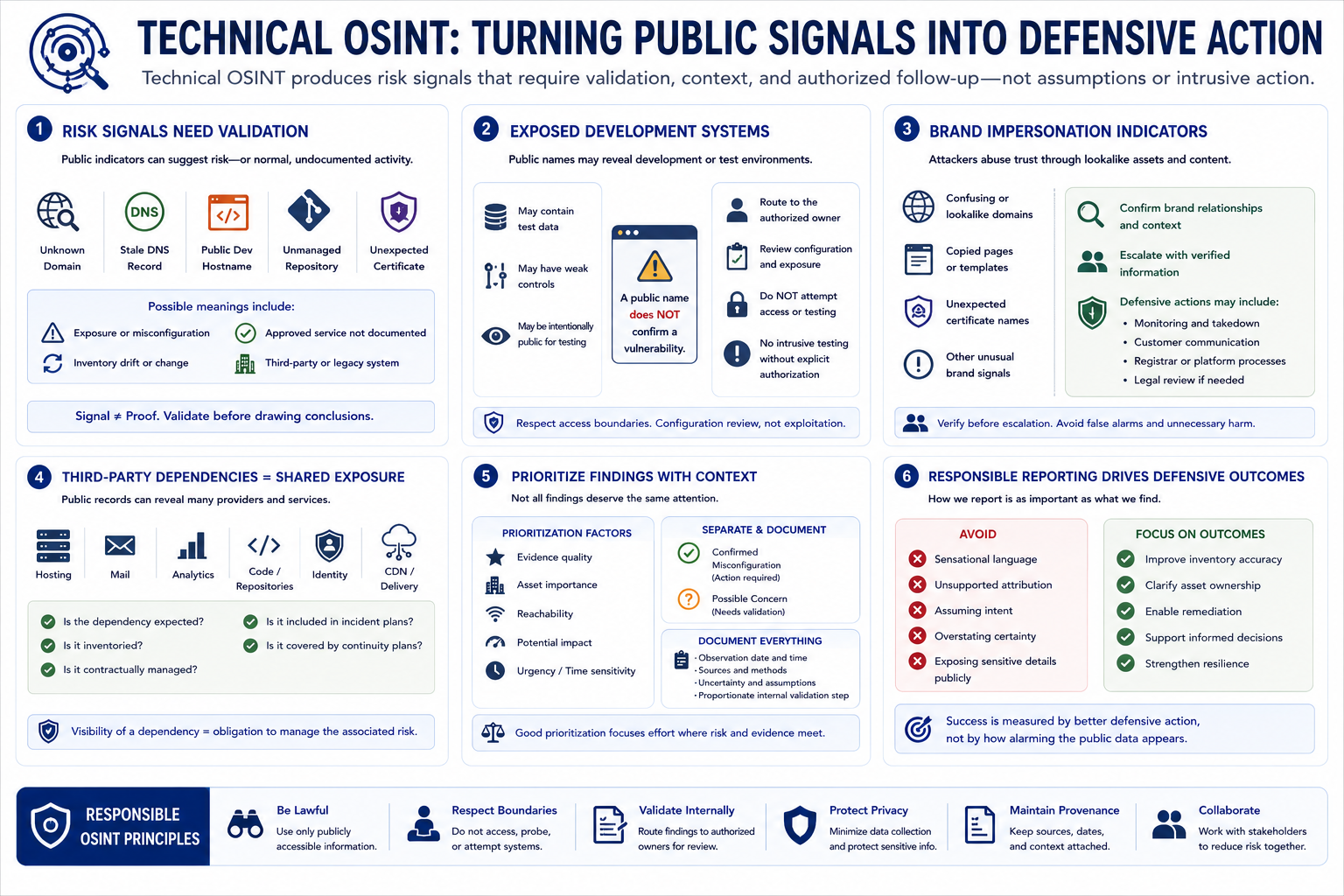
Technical OSINT produces risk signals that require validation. An unknown domain, stale DNS record, public development hostname, unmanaged repository, or unexpected certificate may indicate exposure, inventory drift, or an approved service that was simply not documented.
Exposed development systems can contain test data or weak controls, but a public name alone does not establish vulnerability. Route the finding to the authorized owner for configuration review. Do not attempt access or intrusive testing without explicit authorization.
Brand impersonation indicators may include confusing domains, copied pages, or unexpected certificate names. Confirm brand relationships and context before escalation. Defensive action may involve monitoring, customer communication, registrar processes, or legal review.
Third-party dependencies create shared exposure. Public records can reveal hosting, mail, analytics, code, identity, and delivery providers. Assess whether the dependency is expected, inventoried, contractually managed, and included in incident and continuity plans.
Prioritize findings by evidence quality, asset importance, reachability, potential impact, and urgency. Separate confirmed misconfiguration from possible concern. Include observation date, sources, uncertainty, and a proportionate internal validation step.
Responsible reporting avoids sensational language and unsupported attribution. Technical OSINT should improve inventory, ownership, remediation, and decision-making while respecting access boundaries. Its success is measured by clearer defensive action, not by how alarming the public data appears.